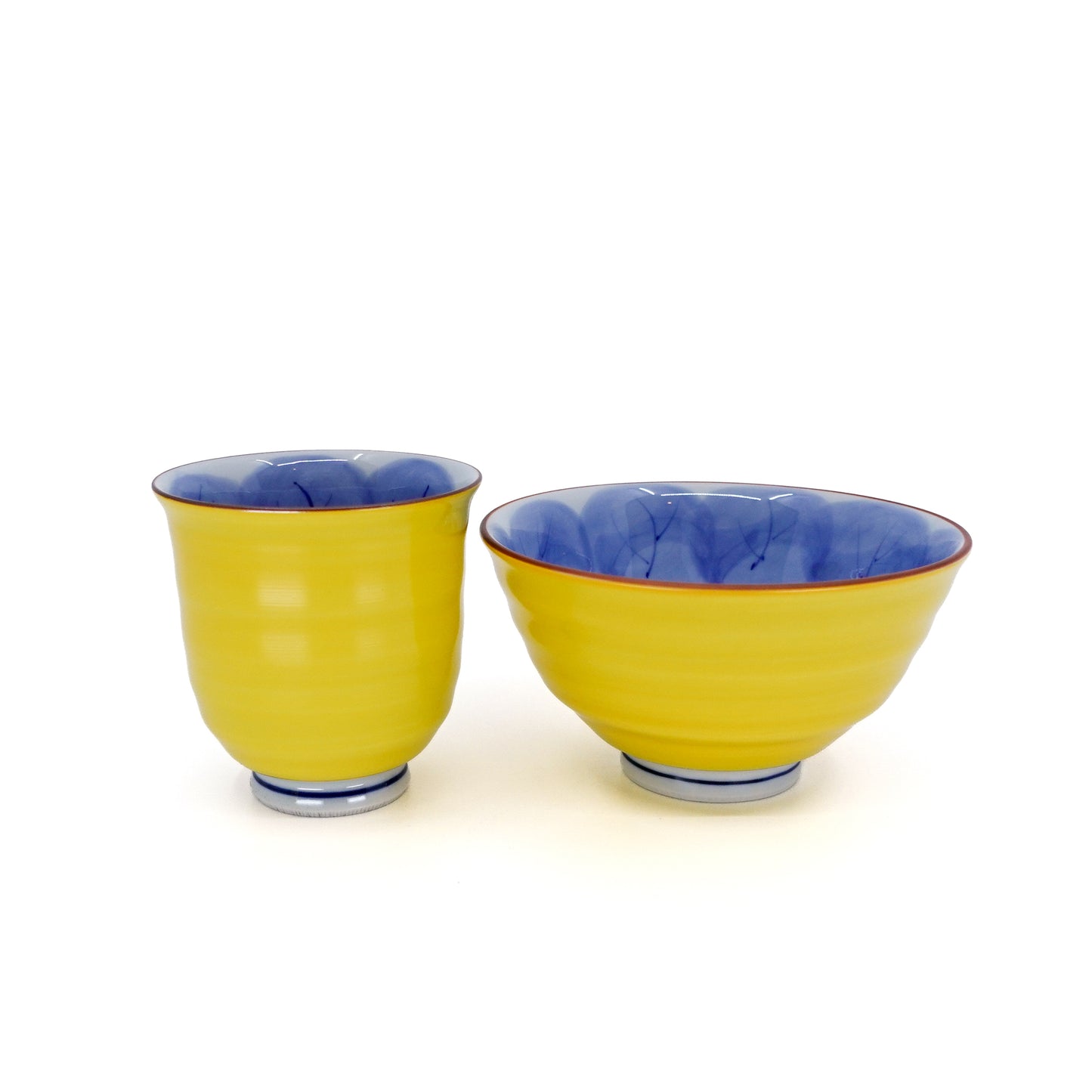
Owl Motif Yellow-Blue Rice Bowl
In stock
Delivery within the UK in 2-5 days
Free shipping over £50, Free express shipping over £150
Couldn't load pickup availability
From the historic pottery town of Hasami, this bowl represents a celebrated tradition famed for its breathtaking hand-painted artistry. Crafted with an elegant simplicity, it brings a cheerful yet serene energy to the dining table. The gentle flare of the rim offers an exceptionally comfortable hold and a pleasant touch to the lips, grounding each meal in a sense of warmth and comfort.
The exterior is coated in a bright yellow glaze, while the interior features a hand-painted dance of delicate blue leaves. Tucked amongst this foliage sits a hidden owl (梟, fukurou in Japanese), a traditional Japanese symbol of auspicious charm due to a beautiful play on words: fukurou, when written as 不苦労, translates directly to "no hardship". Paired with its keen eyesight which symbolizes a clear, untroubled vision for the future, this charming creature serves as a protective guardian for the home.
Perfect for serving steaming portions of short-grain rice, seasonal side dishes, or morning cereals, this bowl brings a subtle accent of joy to any table. Its lightweight design and engaging narrative make it ideal for regular dining, yet its distinct artistry makes it equally suited for welcoming guests. Given the owl's meaning of fortune and clear vision, this piece serves as a heartfelt gift for loved ones embarking on new journeys, for birthdays, or as a token of Japanese craftsmanship and fortune for your own home.
Dishwasher-safe, though gentle hand washing is always recommended to safeguard the glaze and delicate hand-painted motifs for years to come.
Please be aware that handmade items may differ slightly in colour, pattern, shape, and size from the product image.
Dimensions
Dimensions
Diameter: 10.5 cm
Height: 6 cm
Please note that product dimensions are approximate and individual items may have slight variations.
About the Region
About the Region
Hasami Ware
Originating in Nagasaki Prefecture, Hasami-yaki has been at the centre of everyday Japanese dining for over four hundred years. Born from a desire to create durable, high-quality tableware for common use, Hasami artisans revolutionised the craft by introducing large-scale climbing kilns. This approach allowed them to achieve remarkable consistency, making porcelain accessible to ordinary households across the country.
Rather than a single potter producing every stage, the process is shared amongst specialised masters: from the clay preparation and mould-making to the casting, glazing, and firing. This collaborative system ensures an exceptional level of precision and functional refinement, resulting in pieces that withstand the rigours of daily use.
To ensure this product is right for you, please review the Care Instructions prior to purchase.
Share

About Japanese Crafts
View all-
An Introductory Guide to Japanese Ceramics
Yakimono As you enter the world of yakimono (焼き物, Japanese ceramics), it will likely change how you view the objects that populate your home - it certainly did for us....
An Introductory Guide to Japanese Ceramics
Yakimono As you enter the world of yakimono (焼き物, Japanese ceramics), it will likely change how you view the objects that populate your home - it certainly did for us....
-
Otafuku & Hyottoko: Auspicious Duality and Ever...
In the landscape of Japanese art, few faces are as universally recognised, or are as instantly uplifting, as Otafuku (お多福) and Hyottoko (火男). Often encountered on paper masks hanging at...
Otafuku & Hyottoko: Auspicious Duality and Ever...
In the landscape of Japanese art, few faces are as universally recognised, or are as instantly uplifting, as Otafuku (お多福) and Hyottoko (火男). Often encountered on paper masks hanging at...
-
What is Fuefuki? The Story Behind the Ceramic M...
When you think of traditional Japanese porcelain, you might picture intricate floral patterns, historic landscapes, or formal gold leaf. But nestled in Ishikawa Prefecture, Choemon Kiln has spent the last...
What is Fuefuki? The Story Behind the Ceramic M...
When you think of traditional Japanese porcelain, you might picture intricate floral patterns, historic landscapes, or formal gold leaf. But nestled in Ishikawa Prefecture, Choemon Kiln has spent the last...